

In August 2026, Kanetora Bach Dang Factory in Ninh Binh organized a lifting equipment operation training program for employees, covering three key equipment categories: forklifts, aerial work platforms, and overhead cranes. Combining classroom instruction with on-site practical training, the program aimed to strengthen operational skills, safety awareness, and proactive risk prevention across the factory.
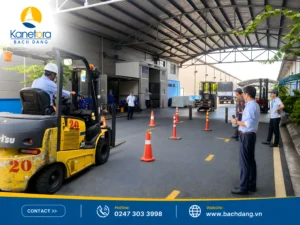
A modern manufacturing facility is not defined solely by its production lines, machinery, or capacity.
Behind every machine are the people who operate it.
That is why, alongside investments in production technology and quality management systems, employee training and occupational safety awareness remain essential components of daily operations at Kanetora Bach Dang.
Lifting Equipment Safety Training at Kanetora Bach Dang
Within an industrial manufacturing environment, lifting equipment supports a wide range of activities, including material handling, internal transportation, maintenance, technical work, and access to elevated working areas.
The August 2026 training program focused on three equipment categories commonly associated with factory operations:
- Forklifts
- Aerial work platforms
- Overhead cranes
Rather than relying on classroom instruction alone, the program combined theoretical knowledge with practical training in the actual factory environment.
This approach helps employees connect safety principles directly with the conditions they encounter in their daily work.
1. Forklift Operation Training
Forklifts play an important role in the movement of raw materials, semi-finished products, finished goods, and other loads across production and warehouse areas.
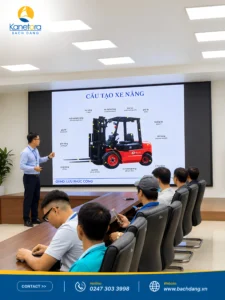
During the theoretical session, participants reviewed the main components and operating principles of a forklift, including:
- Forks
- Load backrest
- Mast
- Lift chains and cylinders
- Steering and control systems
- Operator compartment
- Counterweight
- Wheels and other operating components
Understanding the equipment itself is important because effective operation requires more than simply knowing how to control the vehicle.
Operators also need to understand how the equipment works and why specific operating procedures must be followed.
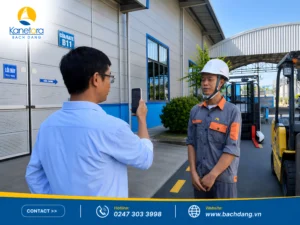
Following the classroom session, participants moved to the factory area for practical exercises and hands-on familiarization with real operating conditions.
Safe forklift operation starts with observation
In a manufacturing environment, driving skills are only one part of safe forklift operation.
Operators must also pay attention to:
- Travel routes
- Working space
- Nearby employees
- Obstacles
- Load condition
- Intersections between pedestrians and vehicles
- Surrounding production activities
A safe operation therefore begins before the forklift starts moving.
The ability to recognize potential risks and assess the surrounding environment is just as important as the ability to control the equipment itself.
2. Aerial Work Platform Operation Training
The program also included aerial work platform operation training.
Aerial work platforms are used to support employees working at elevated positions during activities such as inspection, installation, maintenance, and other technical tasks within the factory.
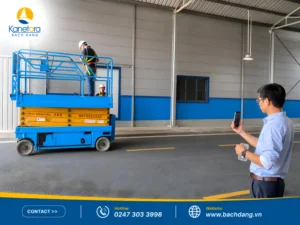
During the practical session, employees were able to work directly with the equipment in the actual production environment.
Compared with ground-level work, elevated work requires greater awareness of equipment conditions, surrounding space, and coordination between the operator and personnel working nearby.
The training therefore helped participants strengthen their understanding of equipment inspection, safe operating practices, and communication during work at height.
Safety at height requires proactive awareness
Every task performed at height should begin with a preventive mindset.
Safety is not solely the responsibility of the person standing on the platform.
Employees working in the surrounding area also need to understand the operating zone of the equipment and coordinate appropriately throughout the task.
When everyone understands their role, safety becomes a shared responsibility across the working area.
3. Overhead Crane Operation Training
The third component of the program focused on overhead crane operation.
In industrial facilities, overhead cranes are used to lift and move loads, machinery, components, or other materials within a defined operating area.
Because crane operation involves suspended loads, lifting zones, and coordination between multiple personnel, proper knowledge, practical skills, and safety awareness are essential.
Through the training program, employees reviewed key operational considerations and strengthened their awareness of the risks associated with lifting activities.
More importantly, the program reinforced a fundamental principle:
Lifting operations should never rely solely on routine or experience. Every lifting activity requires observation, coordination, and compliance with established procedures.
Three Types of Equipment, One Common Goal: Safe Operation
Forklifts, aerial work platforms, and overhead cranes serve different purposes.
However, they all operate within an environment where people, machinery, materials, and production activities interact continuously.
The objective of the training program was therefore not simply to teach employees how to operate individual pieces of equipment.
More importantly, it aimed to strengthen a shared operating mindset:
Understand the equipment – observe before acting – follow procedures – proactively prevent risks.
This mindset contributes to a safer and more disciplined manufacturing environment.
From Equipment Safety to Production Stability
In an industrial packaging factory, individual production stages do not operate independently.
At Kanetora Bach Dang, the FIBC manufacturing process follows a structured sequence including extrusion, weaving, coating, cutting and printing, sewing, inspection, and packing.
Learn more about our manufacturing process:
👉 Jumbo Bag Manufacturing Process at Kanetora Bach Dang Factory
Alongside production machinery, material movement, internal transportation, maintenance, technical work, and finished-goods handling take place continuously throughout the factory.
For this reason, safe lifting equipment operation contributes directly to the stability of the overall manufacturing system.
One accurate operation helps maintain production flow.
One careful observation can prevent a potentially unsafe situation.
And a well-trained workforce creates a stronger foundation for reliable factory operations.
Safety Is Part of Manufacturing Capability
When selecting an FIBC or Jumbo Bag manufacturer, customers often assess several factors:
- Production capacity
- Machinery and technology
- Quality control systems
- International certifications
- Order fulfillment capability
- Production consistency
All of these capabilities ultimately depend on people.
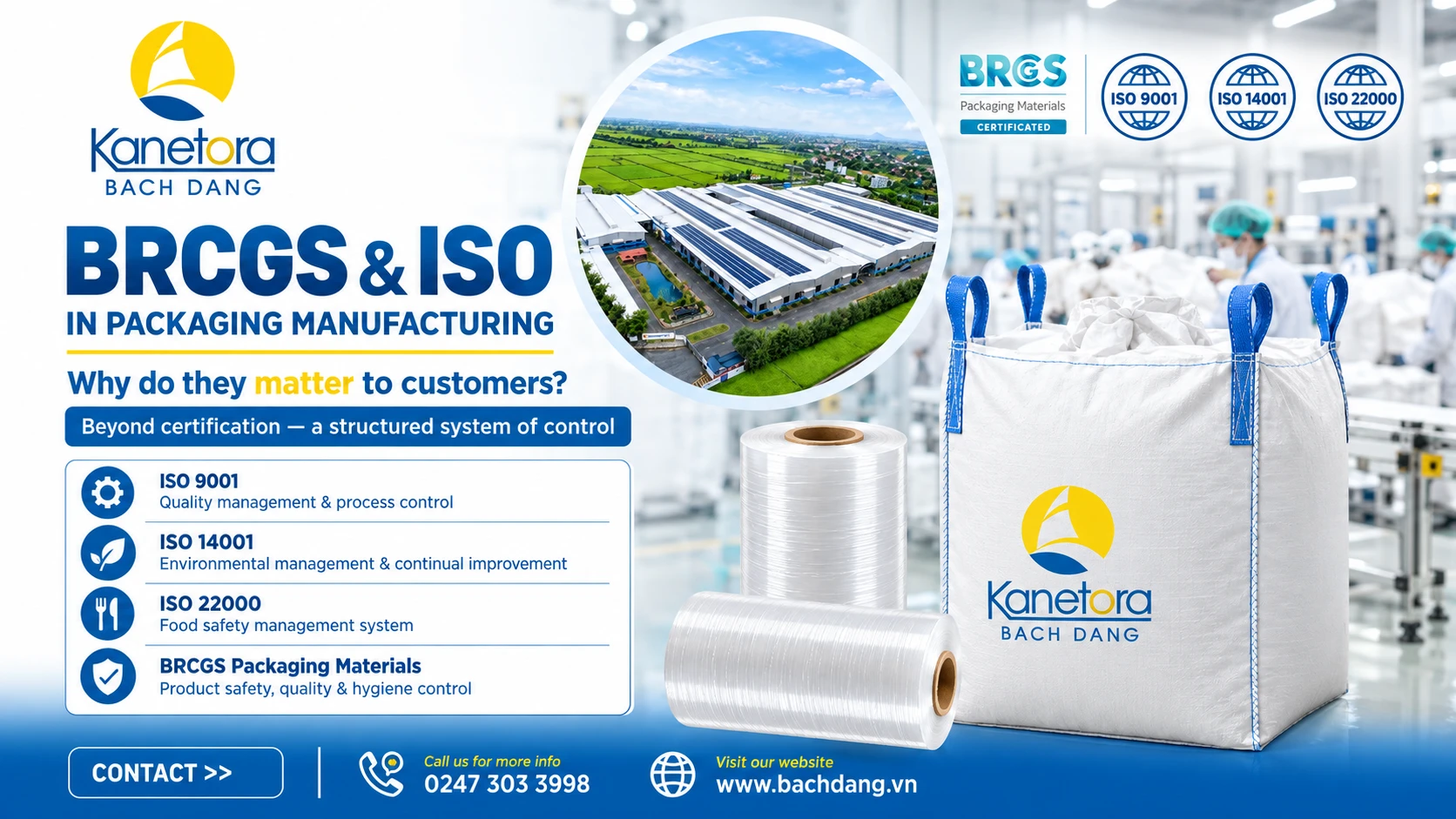
Kanetora Bach Dang operates an integrated industrial packaging manufacturing system covering key product categories including FIBC/Jumbo Bags, block bottom valve bags, and multi-layer PE films.
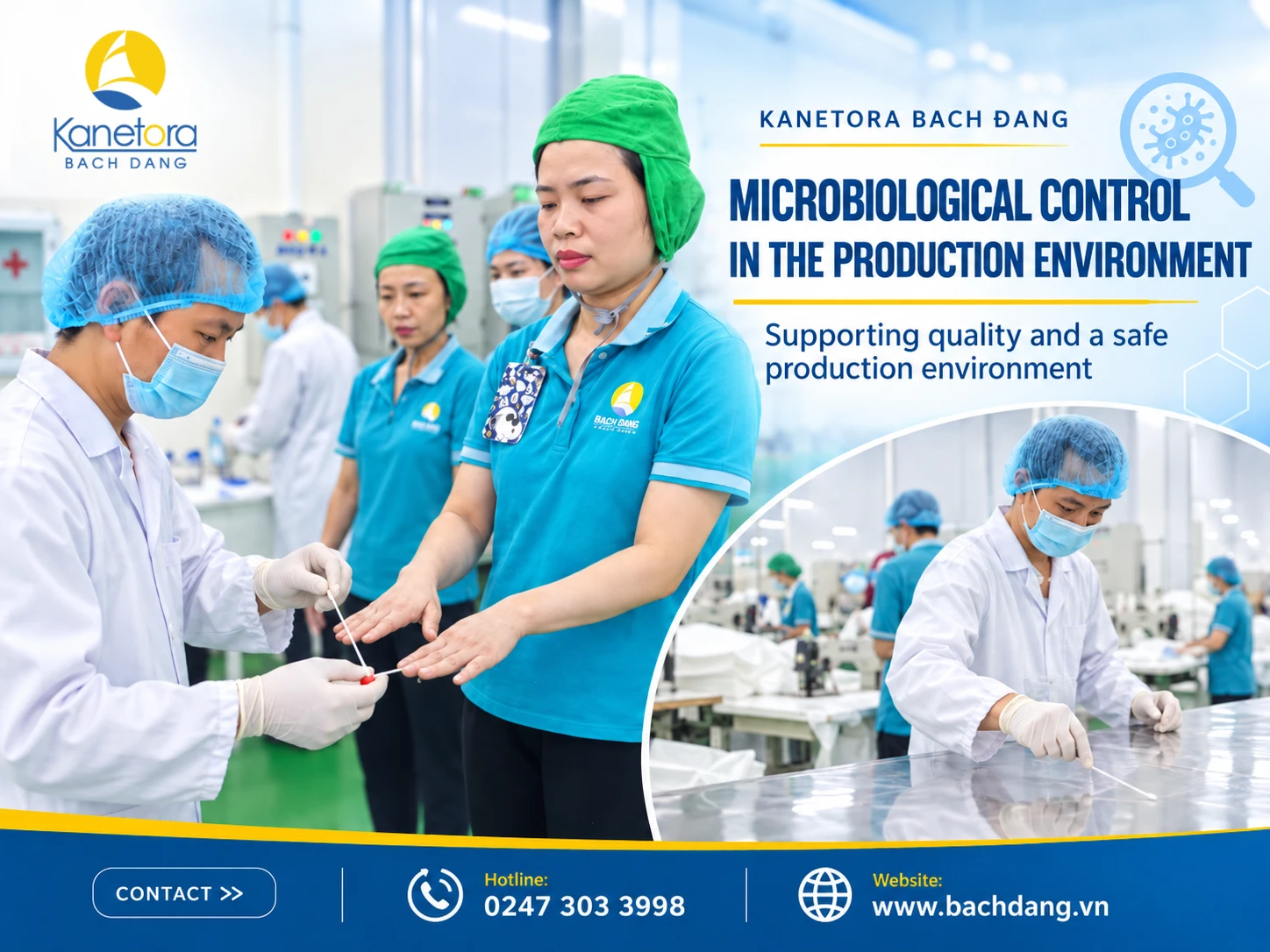
The factory also applies structured quality control and quality assurance systems throughout production.
However, machinery and management systems alone are not enough.
A reliable manufacturing operation also requires a workforce capable of operating equipment responsibly and consistently.
Modern machinery requires proper operation.
Strong procedures require disciplined implementation.
Standards only create real value when they are maintained through everyday actions.
Training Is Not Only About Knowing How to Work — It Is About Working Correctly
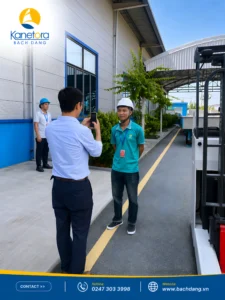
Factory training delivers the greatest value when knowledge is translated into daily working behavior.
That can begin with simple actions:
Checking equipment before use.
Observing the surrounding area before operating.
Avoiding complacency even when performing familiar tasks.
Reporting unusual conditions.
Coordinating with colleagues before lifting or moving loads.
And most importantly, stopping an operation when conditions are not safe.
When these actions become habits, training evolves beyond a single program and gradually becomes part of the factory’s operating culture.
People Are the Foundation of Sustainable Manufacturing
At Kanetora Bach Dang, people are an essential part of the factory’s long-term manufacturing capability.
Alongside investments in facilities, production lines, machinery, and working conditions, the company continues to strengthen employee skills, discipline, and responsibility.
This philosophy is also reflected in the culture of “Working With All Our Heart” at Kanetora Bach Dang.
👉 Working With All Our Heart – Kanetora Bach Dang
Working with commitment in a manufacturing environment is not simply about completing an assigned task.
It also means taking responsibility for product quality, the equipment being operated, colleagues working nearby, and the safety of the entire team.
Building a Safer Factory Through Everyday Actions
The forklift, aerial work platform, and overhead crane operation training program held at Kanetora Bach Dang in August 2026 represents another practical step in strengthening workforce capability and building a professional manufacturing environment.
From classroom instruction to hands-on practice.
From understanding equipment to applying knowledge in real operating conditions.
From individual operator responsibility to collective safety awareness.
Every part of the program supports one common objective:
More efficient production must go hand in hand with safer operation.
Investing in a modern factory is not only about investing in more machines.
It is also about investing in the people who have the knowledge, skills, and responsibility to operate those machines properly every day.
At Kanetora Bach Dang, building a stronger manufacturing operation starts with actions like these.
Frequently Asked Questions
What equipment was included in the Kanetora Bach Dang training program?
The August 2026 training program covered three main categories: forklifts, aerial work platforms, and overhead cranes, combining theoretical instruction with practical training at the factory.
Why is lifting equipment operation training important in a factory?
Lifting equipment operates in an environment where employees, machinery, materials, and vehicles often work in close proximity. Training helps employees understand the equipment, improve operational skills, and develop a proactive approach to risk prevention.
Are forklifts and aerial work platforms used for the same purpose?
No. Forklifts are primarily used to lift and transport materials and goods, while aerial work platforms are designed to provide personnel with access to elevated working positions. Because their functions and operating conditions differ, each type of equipment requires appropriate operational knowledge and training.
Does safety training contribute to the capability of an FIBC factory?
Yes. Manufacturing capability depends not only on machinery and production capacity but also on the stability of the overall operating system. A skilled and safety-conscious workforce helps reduce operational disruption and supports consistent production performance.
Where is Kanetora Bach Dang Factory located?
Kanetora Bach Dang Factory is located in Cau Mai, My Loc Ward, Ninh Binh Province, Vietnam. The facility manufactures industrial packaging solutions including FIBC/Jumbo Bags, block bottom valve bags, and multi-layer PE films.