

Food grade jumbo bags, also known as Food Grade FIBCs or food grade bulk bags, are designed for the storage and transportation of food ingredients such as flour, starch, sugar, rice, grains, whey protein, food additives, and other dry powders or granules.
However, using virgin polypropylene alone does not automatically make an FIBC suitable for food applications.
The hygiene performance of a food grade FIBC depends on the entire manufacturing and quality-control system — including raw-material control, production environment, personnel hygiene, thread and foreign-matter control, bag cleaning, metal detection, traceability, and final packing.
For buyers looking for specific bag configurations, Kanetora Bach Dang provides customizable Food Grade FIBC Bags in U-panel, circular, 4-panel and baffled constructions.
Quick Answer: What Makes a Jumbo Bag Suitable for Food Applications?
A food grade jumbo bag should be evaluated through four key areas:
- Material suitability for the intended food-contact application.
- Controlled manufacturing hygiene to minimize contamination risks.
- Foreign-matter control, including loose threads, dust and metallic objects.
- Documented compliance and traceability appropriate to the target market and end use.
In other words, “food grade” should be treated as a complete packaging-control system rather than simply a material specification.
What Is a Food Grade Jumbo Bag?
A food grade jumbo bag is a specialized type of Flexible Intermediate Bulk Container (FIBC) manufactured under higher hygiene and contamination-control requirements than a standard industrial bulk bag.
Typical constructions include:
- U-panel FIBC
- Circular or tubular FIBC
- Four-panel FIBC
- Baffled or Q-bag
- Coated FIBC
- FIBC with an inner liner
- Dustproof FIBC
- FIBC with filling and discharge spouts
The correct configuration depends on the packaged material, particle size, moisture sensitivity, filling system, discharge system, storage duration, transportation conditions and destination market.
ISO 22000:2018 specifies requirements for food safety management systems for organizations directly or indirectly involved in the food chain. BRCGS Packaging Materials, meanwhile, provides a framework for packaging manufacturing sites to demonstrate quality assurance, legal compliance and product authenticity.
Food Grade Is More Than Using Virgin Polypropylene
A common misconception is that a jumbo bag automatically becomes “food grade” simply because it is made from 100% virgin polypropylene.
Virgin resin is important because it provides better control over material origin and composition than unidentified recycled feedstock. But the resin still passes through multiple manufacturing stages before becoming a finished FIBC.
A typical production flow includes:
PP extrusion → webbing weaving → fabric weaving → coating → cutting and printing → sewing → inspection → packing
Buyers can review the complete FIBC jumbo bag manufacturing process at Kanetora Bach Dang to understand how these stages are connected.
During manufacturing, potential contamination sources can include:
- Dust
- Loose PP fibers
- Loose sewing threads
- Broken needle fragments
- Metal particles
- Paper, wood or hard plastic fragments
- Lubricants and maintenance chemicals
- Cleaning agents
- Odors
- Pest-related contamination
- Cross-contamination from surrounding production activities
For this reason, a food grade FIBC needs to be managed as a complete packaging system, not merely as a polypropylene product.
Main Contamination Risks in Food Grade FIBC Production
1. Physical Contamination
Physical foreign matter is one of the most visible risks in FIBC manufacturing.
Potential contaminants may include:
- Loose threads
- PP fibers
- Broken needle fragments
- Metal fragments
- Dust
- Paper or packaging material
- Hair
- Small plastic pieces
- Wood particles
If these materials remain inside the bag, they may enter the packaged product during filling or discharge.
Typical controls therefore include thread trimming, needle-control procedures, bag cleaning, air blowing, visual inspection and metal detection.
2. Chemical Contamination
Potential chemical contamination may come from:
- Machine lubricants
- Maintenance chemicals
- Cleaning agents
- Printing inks
- Solvents
- Plastic additives
- Materials unsuitable for the intended food-contact application
The packaging manufacturer should therefore control the chemicals used in production, maintenance and sanitation areas and evaluate materials according to their intended application.
3. Biological and Hygiene Risks
The level of biological risk depends on the packaged food, moisture content, storage conditions and exposure during handling.
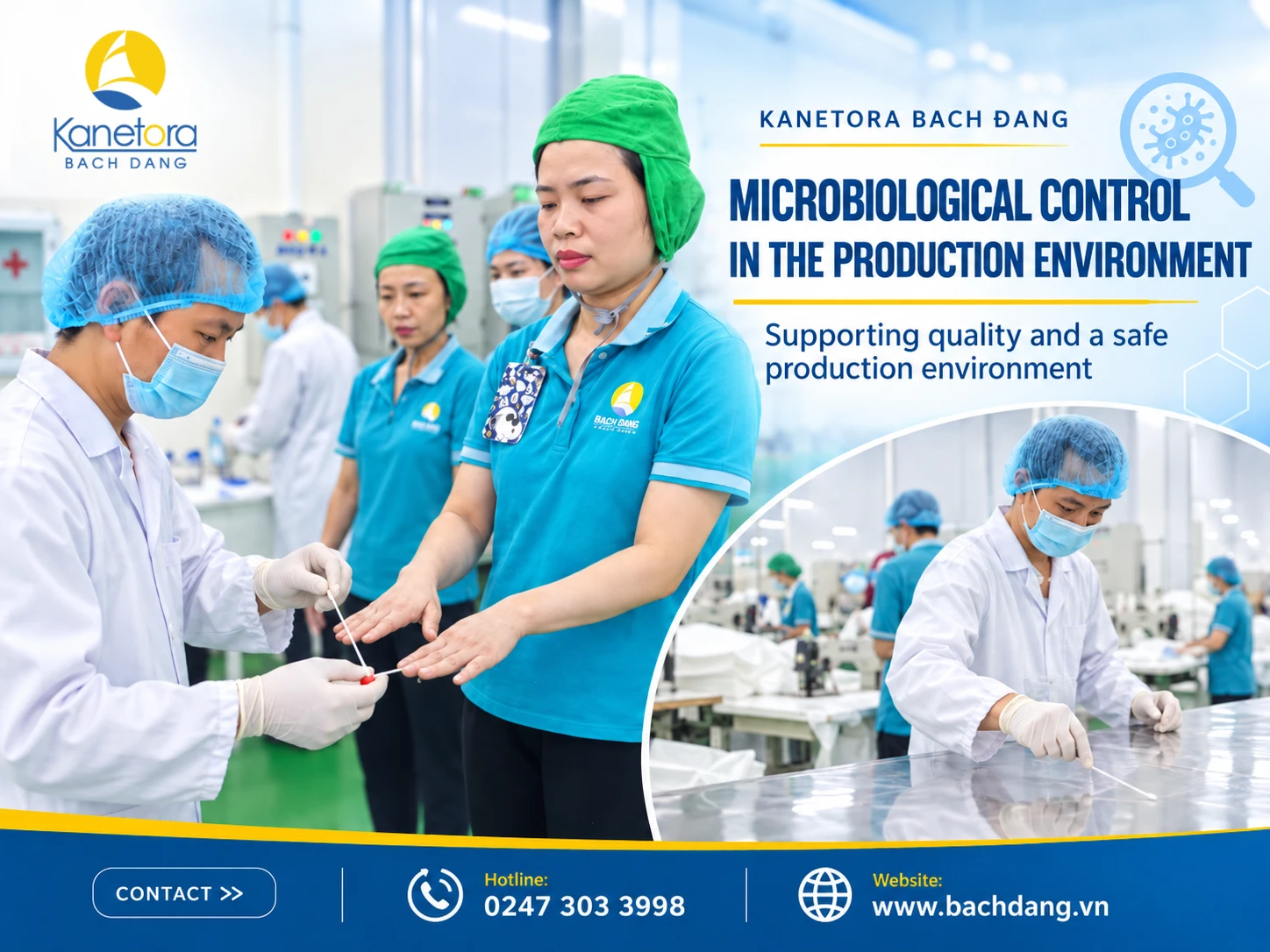
For dry food ingredients, maintaining a clean and dry production environment is particularly important. Pest management, sanitation, personnel practices and clean final packing all contribute to reducing contamination risk.
BRCGS Packaging Materials uses a risk-based approach to packaging manufacturing and includes requirements covering hazard analysis, product safety culture, manufacturing controls and continual improvement. Issue 7 is the current version of the Standard.
8 Key Requirements for Food Grade Jumbo Bags
1. Raw Material Control
A food-grade packaging manufacturer should maintain control over materials such as:
- PP resin
- Masterbatch
- Sewing thread
- Woven fabric
- Coating materials
- Liners
- Printing inks
- Labels
- Document pouches
- Other bag components
For materials intended for direct food contact, buyers should evaluate documentation covering material origin, specifications, relevant test reports and conditions of use.
Commission Regulation (EU) No 10/2011 applies to plastic materials and articles intended to come into contact with food and establishes requirements including migration limits and conditions of use. Its consolidated version has continued to be updated over time.
Importantly, a reference to EU 10/2011 or US FDA requirements should not be interpreted as a blanket certification covering every possible bag design or food-contact condition. Suitability must be considered in relation to the actual material structure and intended use.
2. Controlled Production Areas
Food-related packaging should not simply be handled in the same manner as standard heavy-industrial packaging.
Production and handling areas should be controlled according to hygiene and contamination risks, including:
- Dust control
- Restricted unnecessary materials
- Pest-control procedures
- Controlled personnel access
- Management of finished and semi-finished products
- Defined cleaning procedures
- Hygienic surfaces and working areas
Kanetora Bach Dang operates an integrated manufacturing system and lists cleanroom packing among its production capabilities. Its English website also identifies ISO 9001, ISO 14001, ISO 22000 and BRC Grade A among the factory’s certifications.
3. Personnel Hygiene
Employees working in hygiene-sensitive areas should follow defined personnel-control requirements.
Depending on the production area, these may include:
- Protective clothing
- Hair covering
- Appropriate footwear
- Hand hygiene
- Controlled personal belongings
- Restrictions on loose jewelry or objects
- Controlled entry and exit procedures
- Hygiene training
The objective is not simply to make the production area look clean. Hygiene controls must be incorporated into routine factory operations.
4. Needle and Sharp-Object Control
Sewing needles are a specific foreign-matter risk in FIBC manufacturing.
Factories should therefore maintain procedures covering:
- Needle issuance and replacement
- Broken-needle reporting
- Recovery of broken needle parts
- Identification of affected work-in-progress
- Reinspection where necessary
- Control of knives, blades and other sharp tools
If a needle breaks, the affected production should be contained and checked according to the applicable control procedure before release.
5. Loose Thread and PP Fiber Control
After sewing, loose thread ends and small PP fibers may remain around seams, filling spouts, discharge spouts or liner areas.
These should be removed or controlled to reduce the risk of foreign matter entering the packaged product.
Particular attention should be given to:
- Internal seams
- Filling spouts
- Discharge spouts
- Liner installation areas
- Baffle seams
- Reinforcement areas
6. Air Blowing and Bag Cleaning
Air blowing helps remove light foreign matter from inside a finished bag.
The process may target:
- Dust
- PP fibers
- Loose threads
- Light foreign matter inside the FIBC
Kanetora Bach Dang’s published factory information identifies cleaning and metal detection among the quality-control activities used for higher-standard FIBC applications.
Air cleaning, however, should not be treated as a substitute for upstream contamination control. It works as one part of a multi-stage quality system.
7. Visual Inspection and Metal Detection
After cleaning, bags may undergo further inspection for:
- Remaining loose fibers
- Dirt or stains
- Sewing defects
- Foreign matter
- Liner defects
- Heat-seal defects
- Metallic foreign objects
Metal detection adds another control point for detecting potential metal contamination.
It should complement — rather than replace — needle management, preventive maintenance, visual inspection and production-area control.
8. Controlled Packing and Storage
A cleaned FIBC can still become contaminated if it is left exposed, placed on an unsuitable surface or packed in an uncontrolled environment.
Finished food-grade bags should therefore be protected through appropriate:
- Packing procedures
- Clean storage
- Lot identification
- Traceability
- Protection from pests
- Protection from dust
- Separation from strong-smelling chemicals
- Controlled handling prior to shipment
Food Grade FIBC Quality Control at Kanetora Bach Dang
Kanetora Bach Dang uses an eight-stage FIBC production flow covering extrusion, webbing weaving, fabric weaving, lamination, cutting/printing, sewing, inspection and packing. The factory’s published equipment and quality information includes systems for cleaning, metal detection, tensile testing, UV testing, liner inspection and top-lift testing.
For food-grade and hygiene-sensitive applications, important control points may include:
- Raw-material and semi-finished-product control
- Hygiene control during production
- Loose-thread control
- Air cleaning
- Dust and light foreign-matter removal
- Visual inspection
- Metal detection
- Controlled final packing
Kanetora Bach Dang’s factory in Cau Mai, My Loc Ward, Ninh Binh Province, Vietnam lists an FIBC manufacturing capacity of approximately 300,000 bags per month.
This direct-manufacturing capability is particularly relevant for international buyers that need better control over product specifications, documentation, sample development and batch-to-batch consistency.
Standards and Documents Food-Grade FIBC Buyers Should Review
| Standard / Document | What Buyers Should Check |
|---|---|
| BRCGS Packaging Materials | Packaging manufacturing controls, hygiene, quality and product safety systems |
| ISO 22000:2018 | Food safety management system |
| ISO 9001:2015 | Quality management system |
| ISO 14001:2015 | Environmental management system |
| EU No 10/2011 | Requirements applicable to plastic food-contact materials in the EU |
| US FDA 21 CFR 177.1520 | Requirements applicable to specified olefin polymers under defined conditions |
| Product Specification | Dimensions, SWL, fabric GSM, coating, liner and bag construction |
| Test Report | Test method, material tested and applicable conditions |
| Inspection Report | Batch inspection results |
| Traceability Information | Raw material, production, inspection and packing lot identification |
Kanetora Bach Dang’s published factory information lists BRC Grade A, ISO 9001, ISO 14001 and ISO 22000 among its certifications, while its company profile includes food-contact-related test reports referencing EU No 10/2011 and US FDA 21 CFR 177.1520.
Buyers should nevertheless verify the current validity, scope and applicability of individual certificates and test reports for their specific bag construction and intended application.
Selecting Food Grade Jumbo Bags by Product Type
Flour, Starch and Powdered Sugar
Fine food powders often require simultaneous control of:
- Dust leakage
- Moisture
- Contamination
- Filling efficiency
- Discharge performance
A potential bag configuration may include:
- Virgin PP woven fabric
- Coated fabric
- Food-contact-suitable liner
- Dustproof seams
- Closable filling spout
- Controlled discharge spout
For products particularly sensitive to moisture, buyers can also review our guide to Moisture-Proof Jumbo Bags for Agriculture and Powder Products.
Rice, Grains, Coffee and Seeds
These materials require a balance between moisture protection and ventilation.
A fully sealed liner is not automatically the best solution for every agricultural product.
The packaging specification should consider:
- Initial product moisture
- Required ventilation
- Storage duration
- Export route
- Climatic conditions
- Container conditions
- Fumigation requirements
- Filling and discharge method
For long sea-freight journeys or humid climates, additional moisture protection may be necessary.
Whey Protein, Milk Powder and Nutritional Ingredients
High-value nutritional powders may require tighter control over:
- Hygiene
- Odor
- Moisture
- Liner integrity
- Heat sealing
- Traceability
- Foreign matter
In these applications, the outer FIBC and inner liner should be evaluated as one packaging system.
The liner must also perform reliably during filling and discharge without twisting, collapsing or being pulled back into the product flow.
Food Additives and Sensitive Ingredients
A basic single-layer PE liner may not provide sufficient barrier performance for every sensitive ingredient.
Depending on the product, buyers may evaluate:
- Multilayer co-extruded liners
- Oxygen-barrier films
- Moisture-barrier films
- Aluminum barrier liners
- Specialized sealing configurations
The final choice should be based on product characteristics rather than simply selecting the thickest available liner.
Products Requiring Better Pallet and Container Utilization
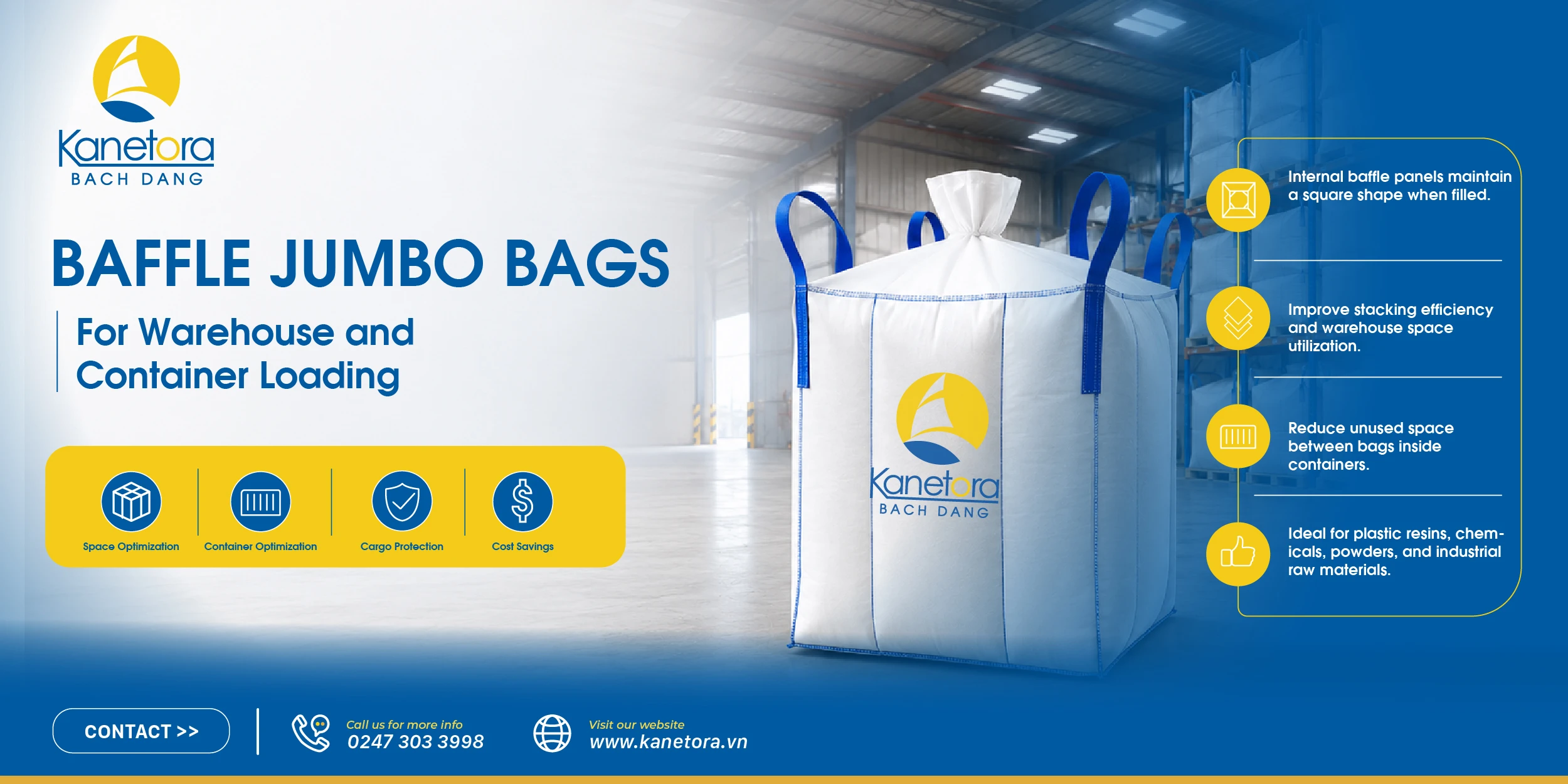
For export applications where maintaining a more square bag profile is important, buyers may consider Baffled FIBC Bags.
Internal baffles help control outward bulging and improve the filled bag’s shape, pallet stability and container-space utilization.
Baffled bags can also be combined with liners or coated fabrics depending on hygiene, moisture and barrier requirements.
Food Grade Jumbo Bag Purchasing Checklist
Before requesting a quotation, buyers should provide the following information:
| Information | Why It Matters |
|---|---|
| Product name and form | Identifies whether the material is powder, granule, pellet or flake |
| Bulk density | Determines required FIBC volume and dimensions |
| Filling weight | Determines SWL and bag structure |
| Destination market | Helps identify regulatory and documentation requirements |
| Direct or indirect food contact | Supports material and liner selection |
| Moisture / oxygen sensitivity | Helps determine coating or barrier requirements |
| Filling method | Ensures compatibility with the top construction |
| Discharge method | Determines bottom design and liner configuration |
| Liner closure | Helps control contamination and moisture |
| Storage duration | Influences barrier requirements |
| Transportation route | Identifies humidity, temperature and handling risks |
| Required inspections | Defines QA and documentation expectations |
| Pallet/container configuration | Helps optimize dimensions and bag shape |
| Existing sample or drawing | Shortens development and sampling time |
Providing complete technical information at the beginning of a project helps reduce unnecessary sampling rounds and improves compatibility with the customer’s actual packaging line.
Why Work Directly with a Food Grade FIBC Manufacturer?
Working directly with the manufacturing plant gives buyers greater visibility into:
- Material selection
- Fabric specifications
- Sewing structure
- Liner design
- Cleaning procedures
- Quality inspection
- Packing
- Traceability
- Sample development
- Production scheduling
Kanetora Bach Dang operates as a direct industrial packaging manufacturer in Vietnam with in-house FIBC production capabilities and supporting manufacturing systems. The company’s English website presents integrated extrusion, weaving, coating, cutting, printing, sewing and cleanroom packing among its factory capabilities.
International buyers can explore more of the factory’s manufacturing capability through the Kanetora Bach Dang industrial packaging application and factory overview.
This integrated approach can support:
- More consistent production
- Faster sample development
- Customized coating and liner solutions
- Better production traceability
- Improved control over delivery schedules
- Customer-specific inspection requirements
Frequently Asked Questions About Food Grade Jumbo Bags
Are food grade jumbo bags required to use virgin polypropylene?
Virgin polypropylene is commonly preferred for food-contact and hygiene-sensitive FIBCs because material origin and composition are easier to control.
However, using virgin PP alone does not make an FIBC food grade. Production hygiene, foreign-matter control, cleaning, documentation, packing and suitability for the intended food-contact application must also be considered.
Do all food grade FIBCs require an inner liner?
No.
A liner requirement depends on the packaged material, particle size, moisture sensitivity, leakage risk, storage environment and food-contact requirements.
Some products may be suitable for coated woven fabric, while sensitive powders may require a dedicated liner or multilayer barrier structure.
Can coating replace an FIBC liner?
Not completely.
Coating helps reduce the gaps between woven PP tapes and can improve dust control and basic moisture resistance.
A liner creates a separate internal barrier and may provide stronger protection against moisture or fine-powder leakage.
The correct solution depends on the product.
Does air blowing remove all contaminants from an FIBC?
No.
Air blowing is one control step intended to remove dust, loose fibers and light foreign matter.
It should work together with preventive contamination controls, personnel hygiene, thread control, needle management, visual inspection and metal detection.
Does ISO 22000 certification mean every bag is automatically food-contact compliant?
No.
ISO 22000 is a food safety management system standard. It demonstrates that the organization has established a system for managing food-safety-related risks within the applicable certification scope.
The suitability of an individual FIBC still depends on its materials, construction, test documentation and actual conditions of use.
Should buyers test samples before placing a large order?
Yes.
Sample trials can confirm compatibility with:
- Filling equipment
- Weighing systems
- Lifting equipment
- Pallet dimensions
- Liner installation
- Liner closure
- Discharge systems
- Actual product flow
For liner-equipped FIBCs in particular, trials may identify twisting, collapsing, puncturing or discharge-related issues before commercial production begins.
Conclusion
A food grade jumbo bag is not simply a standard FIBC manufactured from virgin polypropylene.
Reliable food-grade packaging depends on a complete control system covering:
Materials → production hygiene → contamination prevention → cleaning → inspection → metal detection → packing → traceability
For food manufacturers and ingredient exporters, the right FIBC therefore needs to meet three fundamental requirements:
- Compatibility with the packaged product and intended food-contact conditions
- Manufacturing under appropriate hygiene and contamination controls
- Documentation appropriate to the customer’s market and application
Companies sourcing jumbo bags for flour, starch, sugar, rice, grains, whey protein, food additives or other food ingredients can contact Kanetora Bach Dang to discuss product specifications, liner options, filling and discharge systems, hygiene requirements and sample development.
References
- ISO — ISO 22000:2018, Food Safety Management Systems. ISO defines ISO 22000 as a food safety management system standard for organizations within the food chain.
- BRCGS — Global Standard Packaging Materials Issue 7. The current standard covers packaging manufacturing controls and remains a global benchmark for packaging operations.
- European Union — Commission Regulation (EU) No 10/2011. The regulation addresses plastic materials and articles intended to come into contact with food.
- Kanetora Bach Dang — Factory and Product Information. Factory capacity, manufacturing process, certifications and product configurations were cross-checked against the company’s current English website.