

A jumbo bag, also known as an FIBC bag, bulk bag, or big bag, is a large-capacity industrial packaging solution designed for storing, handling, and transporting dry bulk materials. Jumbo bags are commonly made from woven polypropylene fabric, offering high strength, flexibility, and excellent load-bearing performance.
Depending on the design and application, a jumbo bag can typically carry from 500 kg to 2,000 kg of materials. Some customized FIBC solutions can be engineered for specific load requirements, filling systems, discharge methods, storage conditions, or export standards.
In modern industrial production, jumbo bags are widely used across agriculture, food, plastics, chemicals, minerals, construction materials, animal feed, and export-oriented supply chains. Their ability to handle large volumes of goods while remaining lightweight and easy to move makes them one of the most efficient packaging options for B2B industries.
Understanding what a jumbo bag is, how it is structured, and what should be considered before ordering helps businesses choose the right packaging solution, optimize logistics costs, and reduce risks during storage and transportation.
What Is a Jumbo Bag?
A jumbo bag is a flexible industrial container used to store and transport bulk materials in large quantities. The international technical name for this packaging type is FIBC, which stands for Flexible Intermediate Bulk Container.
Unlike conventional PP woven bags that usually carry only a few dozen kilograms, jumbo bags are designed for much higher capacity. They can be used for powdered, granular, pelletized, flaked, or irregular materials, depending on the bag structure and technical specifications.
Common materials packed in jumbo bags include plastic resin, rice, sugar, flour, starch, fertilizer, animal feed, minerals, sand, cement, calcium carbonate powder, chemical powders, and other industrial materials.
One of the biggest advantages of jumbo bags is their high load-to-weight ratio. The bag itself is relatively lightweight, but it can carry a large amount of product safely when properly designed and manufactured. This helps businesses reduce packaging costs, improve warehouse efficiency, and simplify loading and unloading with forklifts, cranes, or other handling equipment.
Jumbo bags are also known by several common names in different markets:
Jumbo bag is a widely used term in Vietnam and many Asian markets.
FIBC bag is the international industrial term.
Bulk bag is commonly used in global B2B trade.
Big bag is often used in Europe and export markets.
1-ton jumbo bag refers to one of the most common load-capacity categories.
Main Structure of a Jumbo Bag
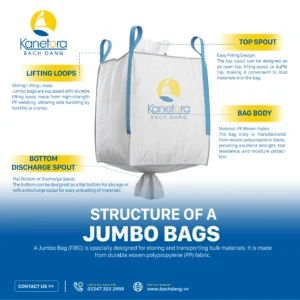
A complete jumbo bag is made up of several important components. Each component affects the bag’s strength, filling efficiency, discharge performance, cleanliness, moisture resistance, handling safety, and suitability for different materials.
1. PP Woven Body Fabric
The body fabric is the main part of the jumbo bag. It forms the bag’s shape and determines its basic strength. Most jumbo bags are produced from woven polypropylene fabric, commonly referred to as PP woven fabric.
Polypropylene resin is extruded into yarn, woven into fabric, and then cut and sewn according to the required bag design. Depending on the product type and load requirement, the fabric weight and strength can be adjusted to ensure safe handling and stable performance.
For materials that require better dust control or moisture protection, the fabric can be laminated/coated or combined with an inner liner. This helps reduce leakage through the fabric weave and provides additional protection for sensitive products.
Common jumbo bag body constructions include:
U-panel jumbo bag: made from one U-shaped body panel and two side panels. This is a versatile construction suitable for many industrial applications.
4-panel jumbo bag: made from four side panels and one bottom panel, providing a more square shape when filled.
Circular or tubular jumbo bag: woven as a tube, reducing vertical seams on the body.
Baffle jumbo bag: equipped with internal baffle panels to help the bag maintain a square shape and reduce bulging during filling.
Choosing the correct body construction affects not only the bag price but also stacking stability, container loading efficiency, storage optimization, and compatibility with filling equipment.
2. Lifting Loops
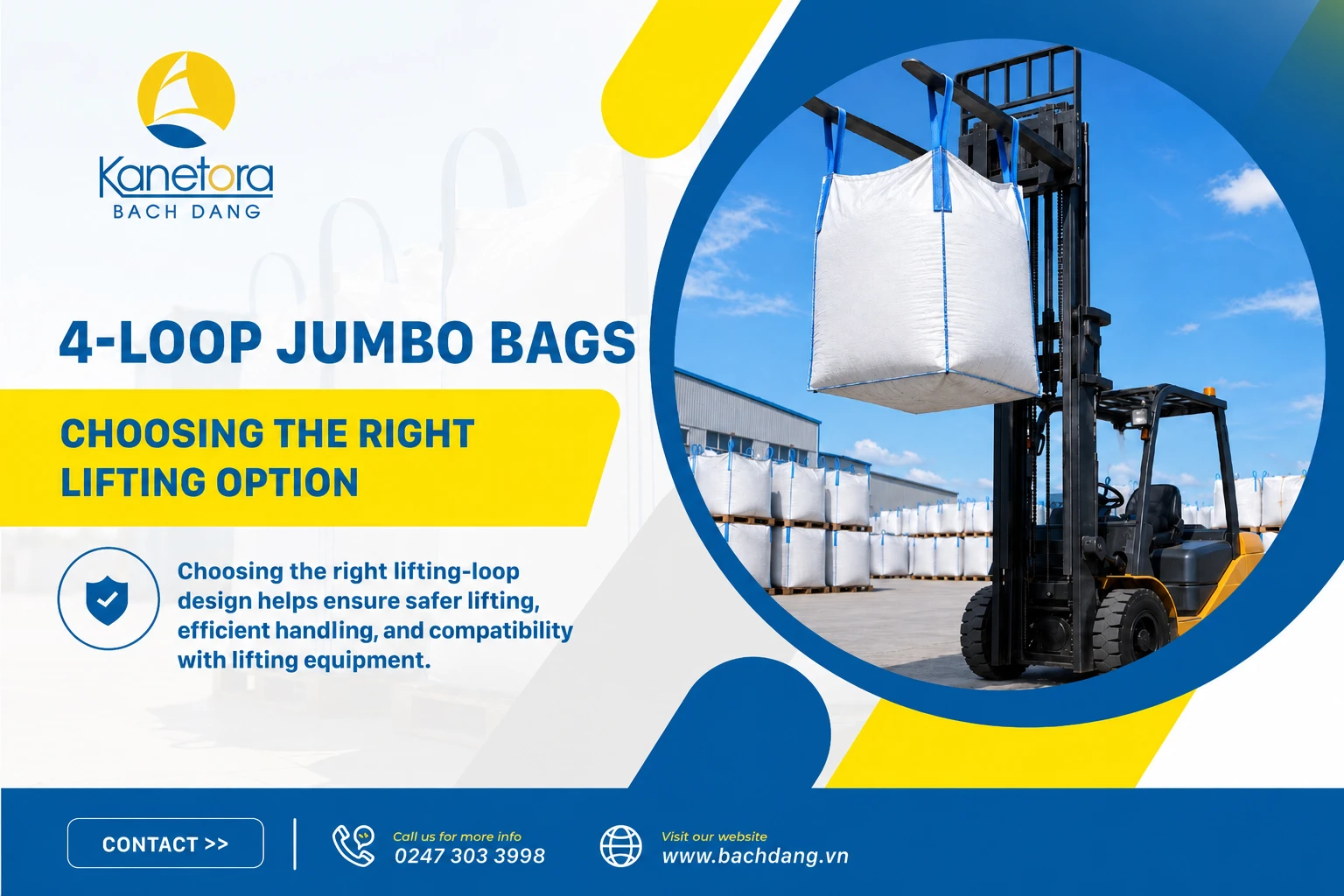
Lifting loops are the handling components that allow the jumbo bag to be lifted by forklift, crane, or other loading equipment. They are among the most important parts of an FIBC bag because they are directly related to operational safety.
Lifting loops are usually made from high-strength PP webbing or mono yarn. Depending on the application, the bag may have four corner loops, cross-corner loops, stevedore loops, or other customized lifting designs.
Common lifting options include:
Corner loops: a standard and widely used lifting design suitable for many common FIBC applications.
Cross-corner loops: sewn diagonally across the corners, making forklift access easier from different directions.
Stevedore loops: additional straps connect opposite lifting loops, creating a more convenient lifting point.
Sling bag design: used for specific handling requirements where flexible lifting and simplified body structure are needed.
When ordering jumbo bags, businesses should clearly define how the bags will be lifted and moved. For example, the handling method may involve forklifts, cranes, pallets, container loading, or automated systems. This information allows the manufacturer to recommend the right lifting design and sewing standard.
3. Top Filling Options
The top section of a jumbo bag is designed according to how the product will be filled into the bag. Depending on the product properties and filling equipment, the top can be fully open, covered, tied, or connected to a filling spout.
Common top filling options include:
Open top: the entire top of the bag is open, allowing fast and simple filling. It is commonly used for sand, gravel, soil, construction waste, and other materials that do not require full closure.
Duffle top or skirt top: a fabric skirt is sewn around the top opening and can be tied after filling. This provides better product protection and helps reduce contamination.
Inlet spout: suitable for automatic or semi-automatic filling systems, especially for powders, granules, chemicals, plastic resin, and food ingredients.
Top cover: used when the product needs surface protection but does not require a fully sealed top.
For dusty, moisture-sensitive, or hygiene-sensitive products, an inlet spout combined with an inner liner is often more suitable than a fully open top.
4. Bottom Discharge Options
The bottom structure determines how the material is discharged from the jumbo bag. Choosing the wrong bottom design can lead to difficult unloading, material loss, uncontrolled discharge, or the need to cut the bag manually.
Common bottom discharge options include:
Flat bottom: a simple bottom without a discharge system. The bag is usually emptied by tilting or cutting.
Discharge spout: a bottom spout allows more controlled product discharge.
Discharge spout with closure: helps prevent leakage during handling and transportation.
Full open discharge: the entire bottom panel can be opened for fast and unrestricted emptying.
Conical bottom: supports better product flow, especially for certain powders or materials that do not discharge easily.
Before ordering, businesses should explain how the material will be discharged, whether the bag is for single-use or reusable discharge, whether discharge speed must be controlled, and whether the material tends to bridge, clump, or flow slowly.
5. Inner Liner, Coating, and Optional Features
Not every jumbo bag requires a liner or coating. However, these options are important for materials that are sensitive to moisture, dust, contamination, static electricity, or hygiene requirements.
Coating or lamination helps make the fabric surface less porous, reducing dust leakage and providing a certain level of moisture resistance.
Inner liner is a PE/PP film inserted inside the bag to provide better protection against moisture, dust, and contamination.
Baffled liner helps maintain a square bag shape and optimize container or warehouse space.
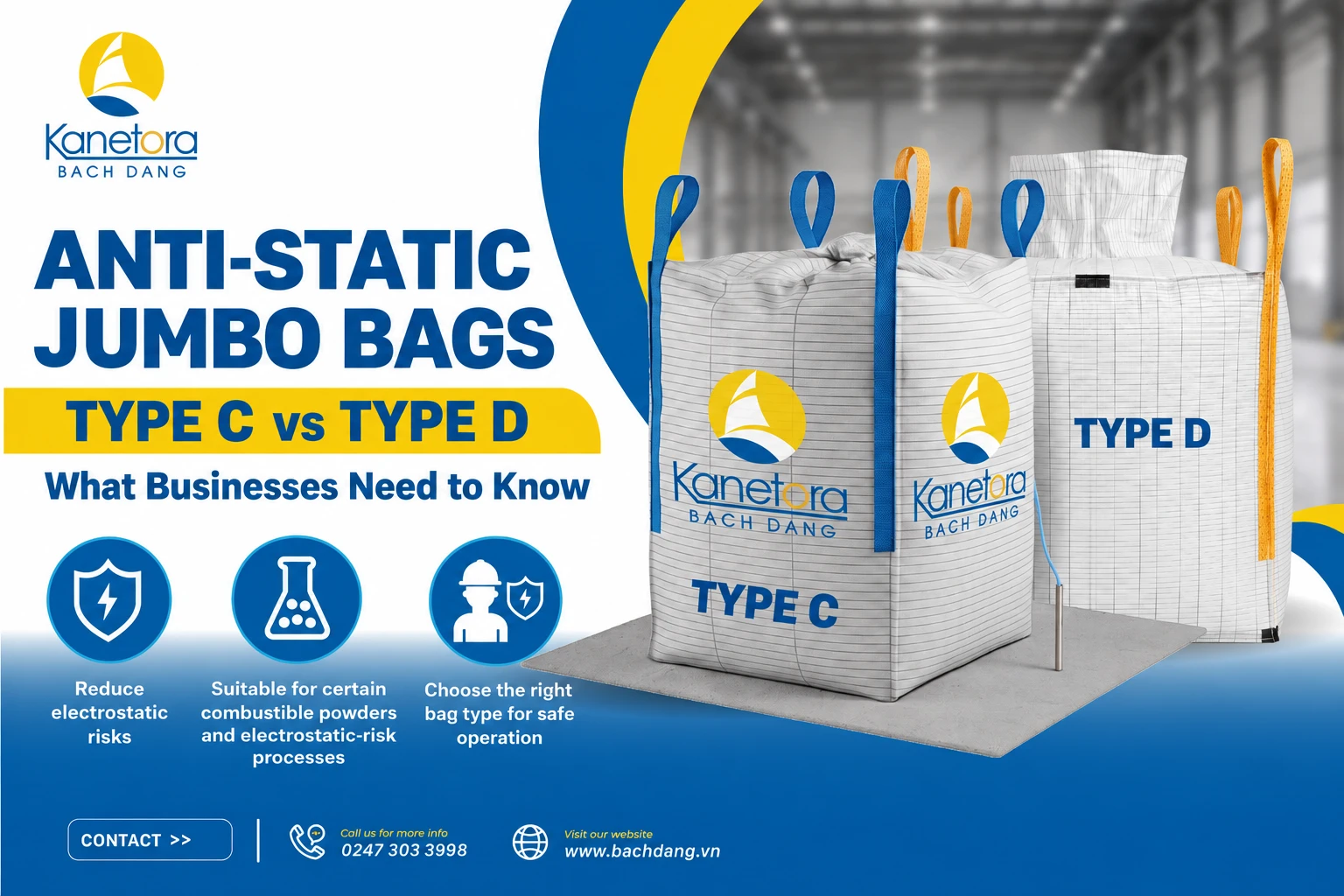
Anti-static FIBC Type B, Type C, or Type D is used when the filling or discharge environment involves electrostatic risks.
UV protection is recommended when the bags may be stored outdoors or exposed to sunlight.
Logo printing, item codes, labels, and document pouches help improve product identification, traceability, and professional presentation.
These additional options may affect the total cost of the bag, but they can significantly reduce product damage, contamination risks, and operational issues during storage and transportation.
Industrial Applications of Jumbo Bags
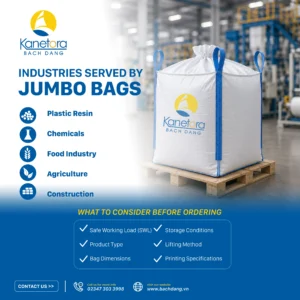
Jumbo bags are used across many industries because they are flexible, customizable, strong, and cost-effective for bulk packaging.
Agriculture and Food Industry
Jumbo bags are used for rice, sugar, flour, starch, coffee beans, cashew nuts, animal feed, seeds, and other agricultural or food-related materials. For these applications, businesses often require clean production conditions, inner liners, suitable filling and discharge systems, and careful contamination control.
Food-grade jumbo bags may also require specific certifications, hygiene standards, and controlled production processes depending on the market and customer requirements.
Plastics and Chemicals Industry
Plastic resin such as PP, PE, PET, masterbatch, additives, color powders, chemical granules, and industrial powders are commonly packed in jumbo bags. Depending on the material, the packaging may need an anti-static structure, moisture protection, liner insertion, dustproof seams, or controlled discharge.
For plastic and chemical products, bag consistency, strength, cleanliness, and discharge performance are key factors in maintaining production efficiency.
Minerals and Construction Materials
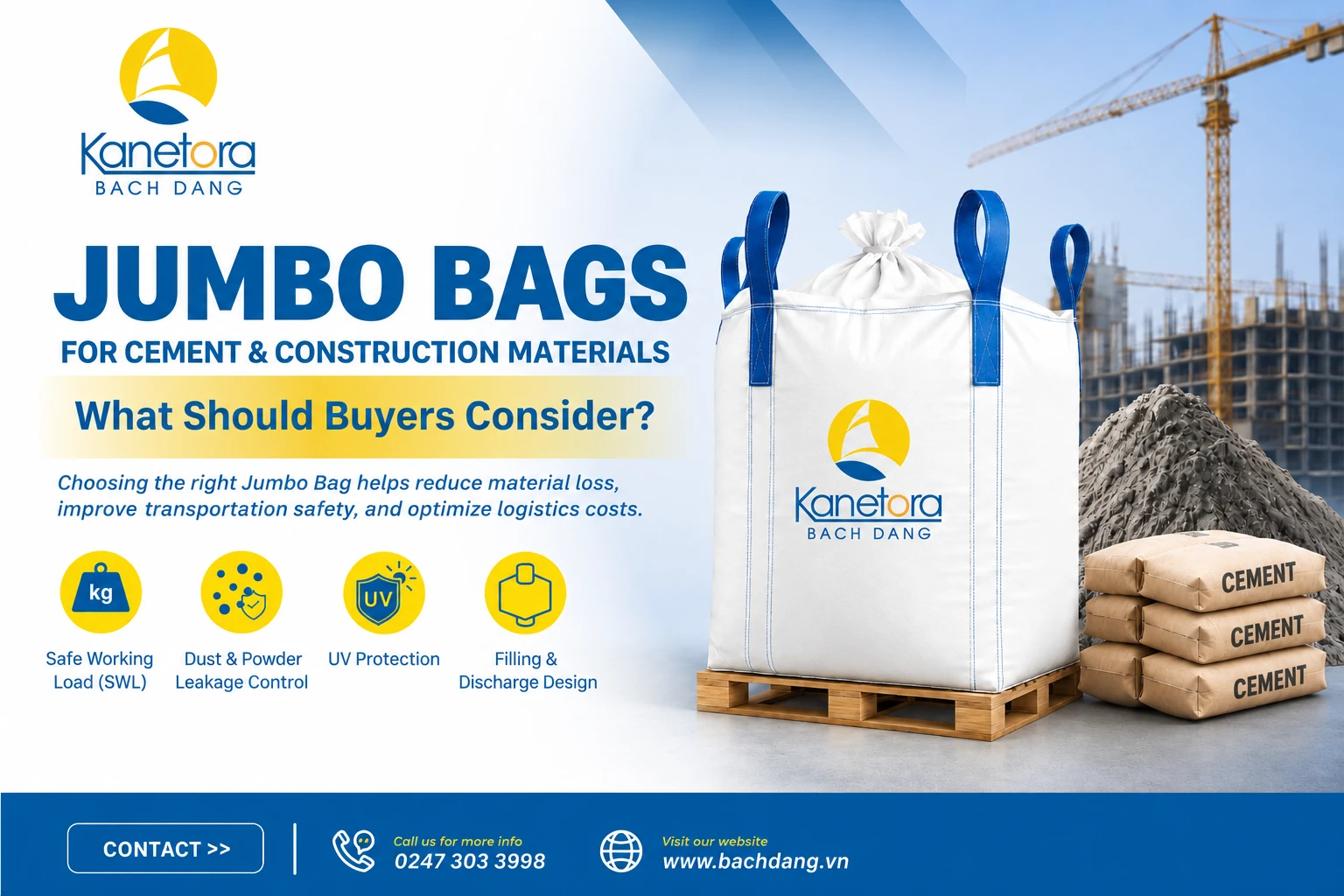
Sand, stone, cement, lime, gypsum, calcium carbonate powder, minerals, and other construction materials are widely packed in jumbo bags. For these applications, the most important factors are load capacity, seam strength, tear resistance, lifting safety, and ease of handling.
Heavy-duty jumbo bags are often designed with reinforced fabric, strong lifting loops, and suitable discharge systems to withstand demanding industrial conditions.
Export and International Trade
For export shipments, jumbo bags are more than just packaging. They are part of the complete logistics and compliance process. The bag must match container loading requirements, stacking plans, labeling standards, customer specifications, and long-distance transportation conditions.
A well-designed jumbo bag helps exporters reduce cargo damage, improve loading efficiency, and meet international buyer expectations.
Why Choosing the Right Jumbo Bag Matters
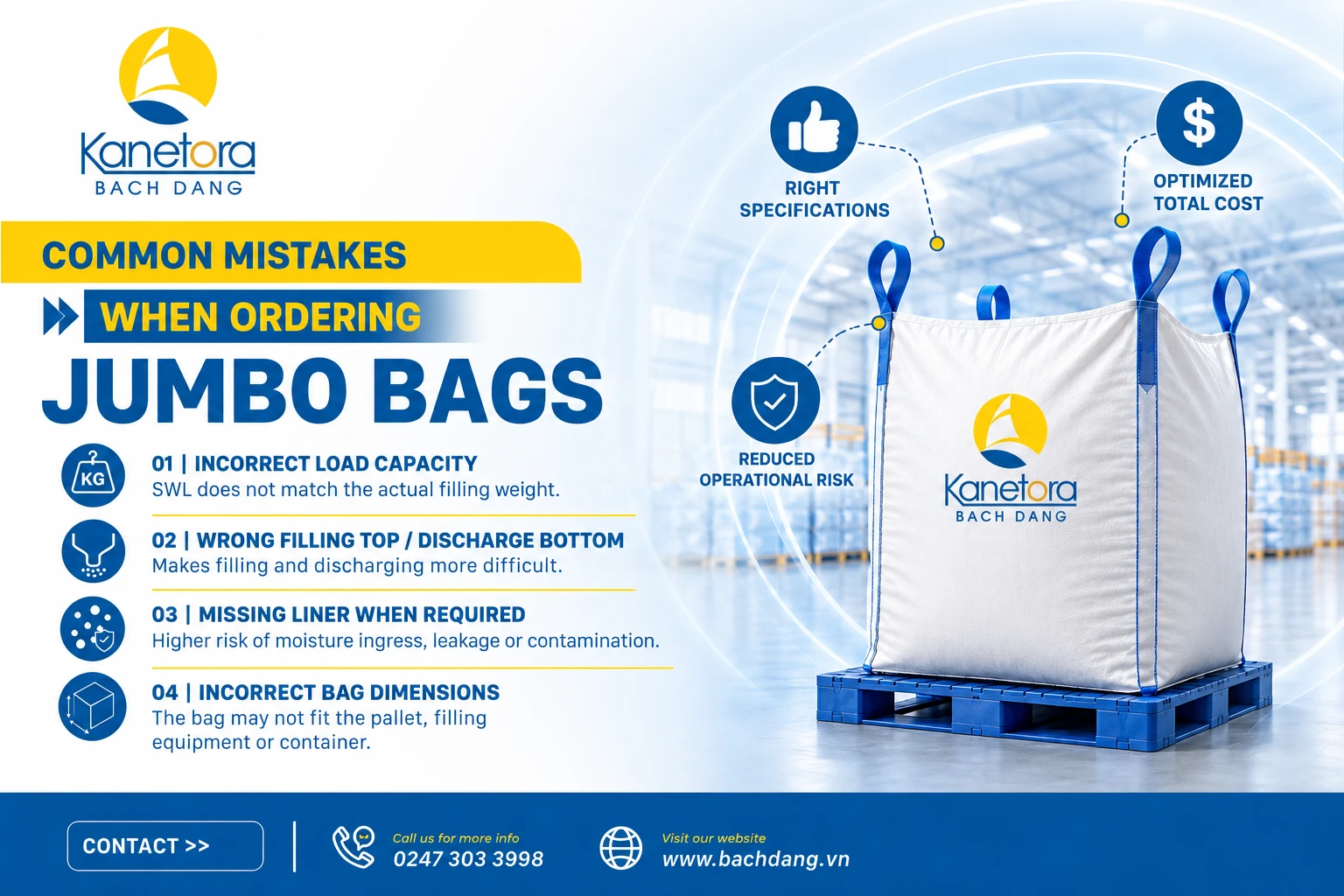
At first glance, many jumbo bags may look similar. However, different products require different bag designs. Using the wrong type of jumbo bag may result in tearing, bottom failure, unstable stacking, difficult discharge, moisture damage, dust leakage, or incompatibility with filling equipment.
Choosing the right jumbo bag helps businesses:
Optimize packaging cost per ton of product.
Reduce cargo damage and material loss.
Improve filling and discharge efficiency.
Maximize warehouse and container space.
Support hygiene, safety, and product protection requirements.
Improve professional presentation in B2B supply chains.
Reduce risks during domestic and international transportation.
For industrial or export orders, it is especially important to confirm the technical specifications before mass production. Sample approval, load testing, and proper specification review can help ensure that the final bag performs correctly in real operating conditions.
What Information Should Be Provided When Ordering Jumbo Bags?
To receive accurate consultation and quotation, businesses should prepare the following information before contacting a jumbo bag manufacturer:
Type of material to be packed: powder, granule, pellet, flake, mineral, agricultural product, chemical, or food ingredient.
Weight per bag: 500 kg, 1,000 kg, 1,250 kg, 1,500 kg, 2,000 kg, or customized load.
Required bag dimensions: length, width, and height.
Bag construction: U-panel, 4-panel, circular, or baffle.
Top filling design: open top, duffle top, inlet spout, or top cover.
Bottom discharge design: flat bottom, discharge spout, full open discharge, or conical bottom.
Need for liner, coating, UV protection, anti-static properties, or dustproof design.
Printing requirements: logo, item code, handling marks, or product identification.
Storage and transportation conditions.
Export requirements, if applicable.
Estimated order quantity and delivery timeline.
The clearer the technical information, the more accurate the bag design and quotation will be. This also helps reduce sample revisions and shorten production lead time.
Kanetora Bach Dang – Direct Jumbo Bag Manufacturer in Vietnam
Kanetora Bach Dang is a direct manufacturer of jumbo bags and FIBC packaging solutions in Vietnam, serving industries such as agriculture, food, plastics, chemicals, minerals, construction materials, and export manufacturing.
The factory provides a wide range of FIBC solutions, including Type A, Type B, Type C, food-grade bags, bags with inner liners, baffle bags, dustproof bags, and customized jumbo bags based on customer requirements.
Kanetora Bach Dang’s production process covers key stages such as extrusion, belt weaving, fabric weaving, laminating, cutting/printing, sewing, inspection, and packing. This integrated manufacturing capability allows the factory to maintain better control over quality, specifications, lead time, and customization.
Working directly with a jumbo bag manufacturer helps businesses optimize costs, improve communication, and ensure that each bag is designed according to the actual product, loading method, discharge process, and transportation condition.
Conclusion
A jumbo bag is an essential industrial packaging solution for businesses that need to store, handle, and transport bulk materials efficiently. A suitable jumbo bag is not only defined by its load capacity, but also by its body construction, lifting loops, top filling design, bottom discharge system, fabric strength, liner, coating, and other technical requirements.
For businesses looking for a direct jumbo bag manufacturer in Vietnam, Kanetora Bach Dang can provide consultation and customized FIBC solutions based on product type, load requirement, handling method, storage condition, and export standards.
Contact Kanetora Bach Dang to receive technical consultation and a customized quotation for your jumbo bag requirements.
FAQ
What is a jumbo bag?
A jumbo bag is a large industrial packaging bag, usually made from woven polypropylene fabric, used to store and transport bulk materials such as grains, powders, plastic resin, chemicals, minerals, cement, and construction materials.
Is a jumbo bag the same as an FIBC bag?
Yes. A jumbo bag and an FIBC bag refer to the same type of packaging. FIBC stands for Flexible Intermediate Bulk Container, which is the international technical term for jumbo bags or bulk bags.
How much weight can a jumbo bag carry?
A jumbo bag commonly carries between 500 kg and 2,000 kg, depending on the bag design, fabric strength, safety factor, lifting loops, and intended application.
What material is used to make jumbo bags?
Most jumbo bags are made from woven polypropylene fabric. Depending on the application, they may also include coating, inner liner, UV protection, anti-static properties, or customized printing.
When should a jumbo bag use an inner liner?
A jumbo bag should use an inner liner when the packed product requires better protection against moisture, dust, contamination, or leakage. Liners are commonly used for powders, plastic resin, food ingredients, chemicals, and sensitive industrial materials.
What information is needed to order jumbo bags?
Businesses should provide product type, load weight, bag dimensions, top and bottom design, lifting method, liner or coating requirements, printing details, order quantity, and storage or transportation conditions.